
A Green Earth Group film
Deforestation
The scariest story you haven’t heard
Watch the horror movie of the year and find out how you can rewrite the ending.
Best with sound, in the dark.
The film
87 seconds you can’t unsee
It opens like any horror movie: an axe, a dark forest, a man walking into the mist. Then it gets scarier, because this story is real.
- Runtime
- 1 min 27 s
- Made by
- Green Earth Group
- Released
- 2025
- Format
- 4K, on-screen text in English
Jump to a chapter
Who’s watching?
Send it to one person who should see it. That’s how a story like this travels, and you can choose how it ends further down this page.
The First Mover Fund puts capital into land restoration projects. Read how it works, check the risks, and talk to the fund team about whether it suits you. Investing involves risk, including the loss of your investment.
If you place cattle, cocoa, coffee, oil palm, rubber, soy or wood products on the EU market, the EU Deforestation Regulation applies to you. Here’s what it asks, in plain language, with a readiness checklist.
Free lesson plans for ages 11 to 18 built around the film, plus a kit for hosting a screening in class.
Synopsis, stills, the poster and the sourced numbers behind the film.
The crisis
Forests are falling. Will you just watch?
Every day, an estimated 42 million trees are cut down.1 In silence.
Deforestation is no longer a slow burn. It’s a full-blown crisis. Entire ecosystems are vanishing. Indigenous communities are being displaced. The planet’s lungs are being cut out, all while climate chaos accelerates.
Our short film pulls back the curtain: trees are dying, and time is running out. But this isn’t just a horror story. You have a role to play, and a choice to make.
Since you opened this page
0
trees have been cut down around the world.
An estimate: about 15 billion trees are lost each year, roughly 485 every second.1
The turn
The crisis is real, but so is the cure.
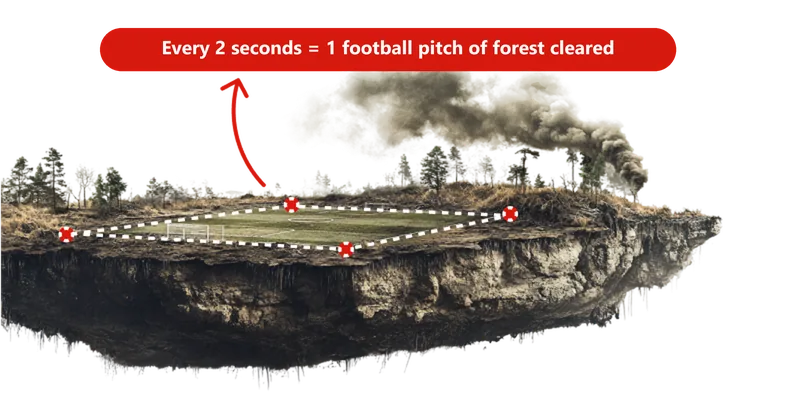
Every two seconds, the world loses forest the size of a football pitch to deforestation.2 These aren’t just trees. They’re rain cycles, biodiversity, jobs, and our last line of defense against collapse.
Unchecked deforestation worsens floods, fuels wildfires and dismantles the biosphere we all depend on.
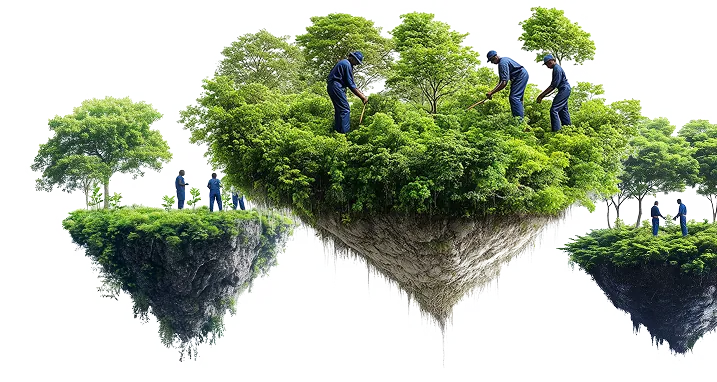
But there’s hope. From reforestation to forest conservation and regenerative agriculture, land restoration rooted in science and stewardship offers a clear, measurable path to healing.
Forests can fall. But they can also rise.
- Protect the forests still standing, and the people who guard them.
- Restore degraded land with the right trees in the right places.
- Change what we buy, so forests are worth more standing than cut.
Latest insights
The newest data, explained
Your ending
Rewrite the ending
Horror films end the same way. This one doesn’t have to. Choose how the story of the world’s forests ends, and see what your ending takes.
Your ending
Protect what’s left
The forests standing today hold carbon, rainfall and wildlife that newly planted trees take decades to replace. This ending starts with what you buy and who you back.
- Know what drives the loss: cattle, soy, palm oil, cocoa, coffee and wood.
- Choose credibly certified, deforestation-free products, and ask brands where their supply comes from.
- Back Indigenous land rights and protected areas: see what the evidence says.
- Send the film to one person who needs to see it.
Your ending
Restore what’s lost
Degraded land can come back: through natural regrowth, farmers planting trees among their crops, and the right native species in the right places. This ending is slow, patient and very real.
- Learn what makes restoration work, and what doesn’t: how to stop deforestation.
- Host a screening at school, at work or with friends: the watch-party kit.
- Find out how much forest your own country has lost on our statistics page.
- Send the film to one person who needs to see it.
Your ending
Back the turnaround
Restoring land takes years, and years take long-term capital. If you are an investor, this ending means looking at whether your money can help, and whether that suits you.
- Read how the First Mover Fund works: the fund, below.
- Read the risks in the fund disclaimer. You can lose your investment.
- Talk to the fund team. They’ll tell you whether the fund is open to you.
- Send the film to one person who needs to see it.
Talk to the fund team
Tell the team about your goals. They’ll come back to you with what the fund does, what it doesn’t, and whether it fits.
Prefer to stay in touch first? Join Forest Watch.
Act now
Nature is under attack. Your capital can fight back.
Through the First Mover Fund, investors can now take action not just with their voices, but with their capital.
We channel investment into certified, high-integrity land restoration projects that restore ecosystems, support farmers, and generate powerful returns in the rapidly growing environmental commodities market.
This isn’t charity. This is green finance with teeth built on transparency, scale, and measurable impact. From tropical reforestation to agroforestry alliances, our portfolio creates real-world change.
Join the fund. Reverse the damage.
The First Mover Fund isn’t just good for the planet, it’s smart for your portfolio. Here’s why:

Verified, high-quality projects
Every initiative is independently audited and certified by the world’s most respected carbon standards.

Nature-based focus
We prioritize solutions with maximum impact on climate, biodiversity, and farmer resilience.

Attractive, scalable returns
Built for long-term performance with passive income potential tied to the surging demand for carbon offsets.

Risk-managed and regulated
We provide full oversight, transparency, and institutional-grade due diligence for investor peace of mind.

Real-world impact and restoration
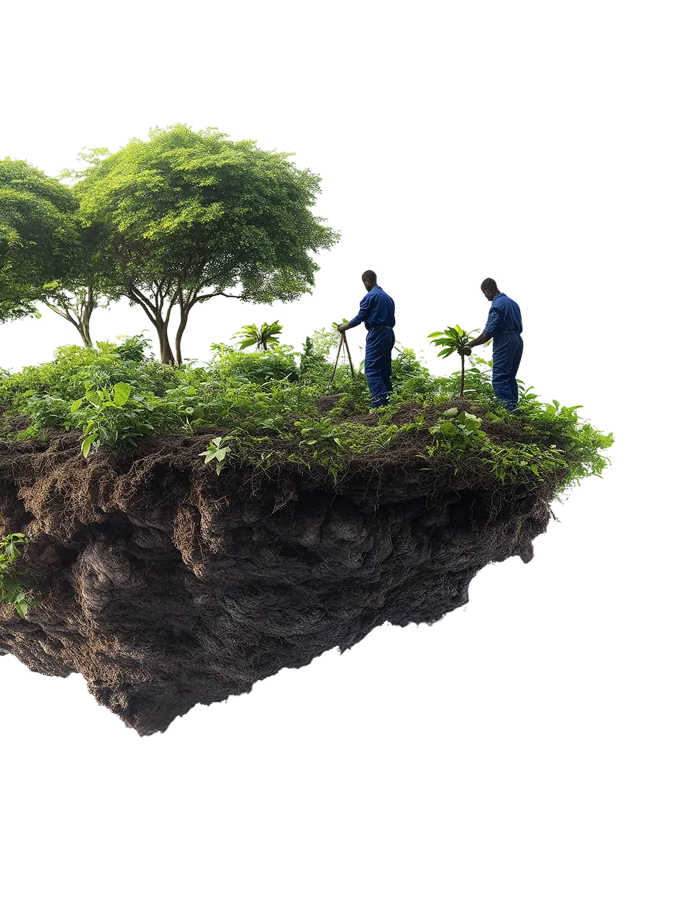
Your capital helps plant millions of trees, make land productive, protect habitats, and empower local farmers.
Make your capital count for the planet
Choose an investment that doesn’t just provide returns. It helps restore the planet.
Tell the fund team about your goals and they’ll get back to you. Investing involves risk, including the loss of your investment. Read the fund disclaimer first.
Prefer WhatsApp? Message the teamTalk to the fund team
All fields are required.
Loading the form…
“This isn’t just a smart investment; it’s something I believe in. I’m proud to be part of reversing the damage.”
 LUCAS M.Investor
“The First Mover Fund gave me a way to align my capital with my values. It’s rare to find a fund that delivers both.”
 CLARA V.Sustainability Advisor
“Investing in the First Mover Fund gave me hope. I know my money is restoring land and helping farmers.”
 DAVID R.Retired Executive
Questions
Frequently asked questions
What is deforestation?
Deforestation is the permanent removal of forest to make way for another land use: mostly farmland, but also mines, roads and towns. Since 1990, 489 million hectares of forest have been lost to deforestation, and between 2015 and 2025 it still claimed 10.9 million hectares a year.2
Why is deforestation bad?
Forests cover 32% of the world’s land2 and are home to 80% of amphibian species, 75% of bird species and 68% of mammal species.6 Clearing them releases carbon: deforestation and other land-use change cause around 11% of global greenhouse gas emissions.5 It also disrupts the clean air, water and rainfall that all living beings rely on.
What are the main causes of deforestation?
Agriculture, logging, mining, new roads and demand for commodities such as palm oil, soy and beef. Agricultural expansion, from commercial crops to cattle grazing, drives almost 90% of global deforestation.4
What are the effects of deforestation on the environment?
Habitat loss, more greenhouse gases, soil erosion and declining biodiversity. Forests are major carbon sinks, so destroying them releases carbon dioxide and weakens one of the planet’s best defenses against climate change.
What effect does deforestation have on biodiversity?
It destroys the habitats that many species depend on. Forests are home to 80% of the world’s amphibian species, 75% of bird species and 68% of mammal species,6 so when forests disappear, species are pushed towards extinction.
How does deforestation cause flooding?
Tree roots hold soil together and forests soak up rainwater. Remove the trees and the land absorbs less water and loses its grip, which increases the risk of flooding and landslides.
Where is deforestation happening the most?
What are the economic impacts of deforestation?
Clearing forest can bring short-term income, but it destroys services that are worth far more over time. The World Bank estimates that the standing Amazon rainforest in Brazil is worth more than US$317 billion a year, up to seven times the private value of extensive farming, logging or mining.8
What is palm oil deforestation and why is it a problem?
Palm oil deforestation happens when forest is cleared for oil palm plantations. In Indonesia, the world’s largest producer, around 31,000 hectares of forest were cleared for industrial oil palm in 2025, and clearing in Papua doubled.9 It threatens wildlife, displaces communities and releases large amounts of carbon.
How can we stop deforestation?
It takes several things at once: protecting standing forest and the rights of the people who live in it, enforcing the law, cleaning up supply chains, restoring degraded land, and making forests worth more standing than cut. Restoration projects that plant trees and reduce local reliance on clearing help bring degraded areas back.
What can individuals do to fight deforestation?
Choose products that are credibly certified as deforestation-free, waste less paper and wood, support conservation and restoration organizations, and raise awareness, for example by sharing our film. Investors can also look at whether putting capital into land restoration suits them; investing always involves risk.
How do nature-based solutions reduce deforestation?
Nature-based solutions protect, restore or better manage ecosystems to cut emissions or remove carbon: reforestation, agroforestry, and protecting forests that would otherwise be cleared. Many combine planting with training and income for local communities, so people depend less on clearing forest. Natural climate solutions could provide 37% of the cost-effective CO₂ mitigation needed through 2030 to keep warming below 2 °C.10
Who made the film Deforestation?
Deforestation is a short film by Green Earth Group, released in 2025. It runs for 1 minute and 27 seconds.
Is it a real horror movie?
It’s built like one, with an axe, a dark forest and a slow build of dread. But the subject is real: the film counts what deforestation does, from floods and fire to the loss of species, and then turns to how forests can recover.
Can I share or screen the film?
Yes. Share the link deforestation.com/film from this site, or show it to a group at school, at work or with friends using our free watch-party kit.
What does “rewrite the ending” mean?
The film ends with a choice, and so does this site. Pick an ending (protect what’s left, restore what’s lost, or back the turnaround) and we’ll show you what that ending takes.
Who can invest in the First Mover Fund?
That depends on where you live and on your circumstances. The fund team can tell you whether the fund is open to you. Use the contact form on this page.
What are the risks?
You can lose some or all of your investment. Projected or past returns are not a guarantee of future results. Read the full fund disclaimer before you decide anything.
Where can I read the full terms?
The terms of the fund are set out in its offering documents. Ask the fund team for them.
Facts checked on 11 October 2026 against the latest FAO, World Resources Institute and IPCC data.
This horror story can still have a happy ending too
Invest today. Save the planet. Become the hero of the movie.
Forest Watch
One map, one story, one action. About once a month.
Stay with the story after the credits roll: where forests are falling, where they’re coming back, and one thing you can do about it.
Sources
- Crowther, T. W. et al. (2015). Mapping tree density at a global scale. Nature 525, 201–205. A model estimate of about 15.3 billion trees lost each year.
- FAO (2025). Global Forest Resources Assessment 2025. A football pitch of 105 × 68 m is 0.71 ha; at 10.9 million ha a year, that is one pitch about every two seconds.
- World Resources Institute (2026). Tropical rainforest loss drops 36% in 2025, but fires threaten global progress. Global Forest Watch data.
- FAO (2021). Agricultural expansion drives almost 90 percent of global deforestation. FRA 2020 Remote Sensing Survey.
- IPCC (2022). Climate Change 2022: Mitigation of Climate Change, Summary for Policymakers. Net CO₂ from land use, land-use change and forestry in 2019.
- FAO and UNEP (2020). The State of the World’s Forests 2020: Forests, biodiversity and people.
- World Resources Institute (2026). Global Forest Review: forest loss.
- World Bank (2023). A Balancing Act for Brazil’s Amazonian States: An Economic Memorandum.
- TheTreeMap / Nusantara Atlas (2026). Palm-oil-driven deforestation stable in Indonesia in 2025 but doubles in Papua.
- Griscom, B. W. et al. (2017). Natural climate solutions. PNAS 114(44), 11645–11650.